We use cookies to make your experience better. To comply with the new e-Privacy directive, we need to ask for your consent to set the cookies. Learn more

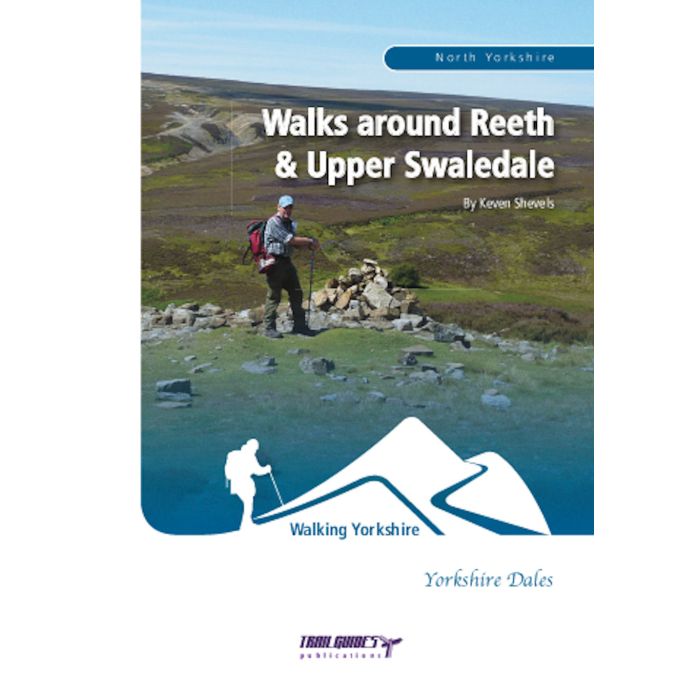
Walking around Reeth and Upper Swaledale
North Yorkshire
£9.99
Temp Out Of Stock
| Cordee Code: | CWN461 |
|---|---|
| Page Size: | 150 x 210 mm |
| No of Pages: | 112 |
| Publisher: | Trailguides Ltd |
| ISBN13: | 9781905444526 |
| Author: | Keven Shevels |
| Published Date: | June 2012 |
| Edition: | 2012 |
| Binding: | Paperback |
| Illustrations: | colour photos and maps |
| Weight: | 240g |
| Product Type: | Book |
| Countries: | United Kingdom |
Considered to be the capital of Upper Swaledale, the village of Reeth stands high above the confluence of the River Swale and the Arkle Beck and over the centuries has kept watch over the changing face of the dale.
Here the Mesolithic hunter/gatherer came on his foraging expeditions, the Bronze Age tribesmen created cattle ranches and began the early steps into agriculture and clashes arose between the native Celts and the invading Anglians who were to form the embryonic England. The Vikings who recognised the similarities between their home and this little rugged dale came and settled, creating as they did so a character that can still be recognised today. During the Medieval period large religious houses became established, evidence of which still exists on the ground and in place names. Then in the 17th and 18th centuries the industrialisation of the dale took place with hundreds employed in the mining and associated industries.
Join the writer in a series of walks that explores both the countryside and the history that shaped it, in this corner of what is thought of as the most beautiful of all the Yorkshire Dales.
Here the Mesolithic hunter/gatherer came on his foraging expeditions, the Bronze Age tribesmen created cattle ranches and began the early steps into agriculture and clashes arose between the native Celts and the invading Anglians who were to form the embryonic England. The Vikings who recognised the similarities between their home and this little rugged dale came and settled, creating as they did so a character that can still be recognised today. During the Medieval period large religious houses became established, evidence of which still exists on the ground and in place names. Then in the 17th and 18th centuries the industrialisation of the dale took place with hundreds employed in the mining and associated industries.
Join the writer in a series of walks that explores both the countryside and the history that shaped it, in this corner of what is thought of as the most beautiful of all the Yorkshire Dales.