We use cookies to make your experience better. To comply with the new e-Privacy directive, we need to ask for your consent to set the cookies. Learn more

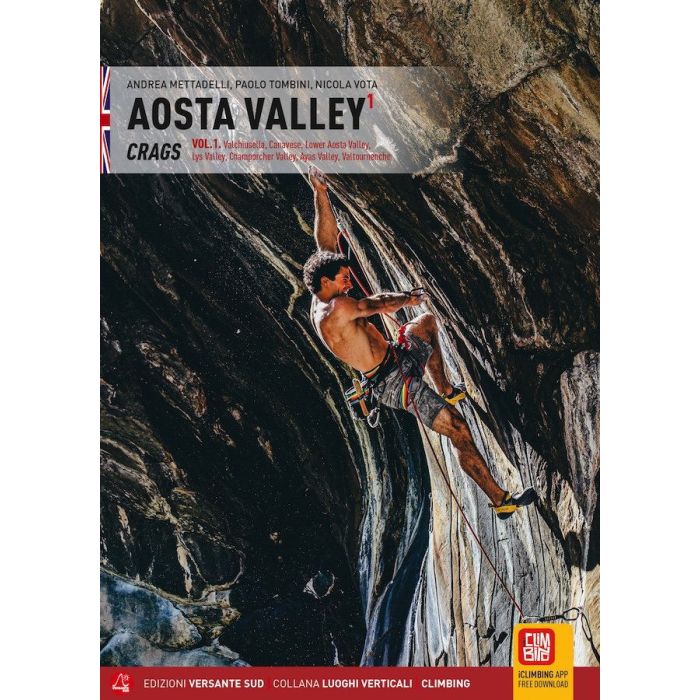
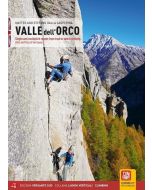
Aosta Valley Crags: Vol 1
Valchiusella, Canavese, Lys Valley, Champorcher, Ayas
£39.95
In Stock
Usually dispatched within 24 hrs. Free delivery to UK for orders £25 and over
| Cordee Code: | CCE830 |
|---|---|
| Page Size: | 153 x 210 mm |
| No of Pages: | 424 |
| Publisher: | Versante Sud |
| ISBN13: | 9788855472258 |
| Published Date: | December 2025 |
| Edition: | 1st: Dec 2025 |
| Binding: | Paperback (flapped) |
| Illustrations: | Colour photos and colour topo diagrams |
| Weight: | 600g |
| Product Type: | Book |
| Countries: | Italy |
This is a comprehensive guidebook covering the eastern side of the Aosta valley around the town of Pont-Saint-Martin, including the foothill areas of the Canavese area. There are many side valleys off the main Aosta Valley that reach relatively high altitudes and are densely packed with crags. These high-altitude crags are perfect in the summer, making it possible to enjoy cool climbing in the shade of Alpine peaks. During the winter there are many crags in the lower valley, often allowing for sunny climbing even on the coldest days.
The guidebook is split into 8 areas which are, Valchiusella, Canavese, Lower Aosta Valley, Gressoney Valley, Champorcher Valley, Ayas Valley, Central Aosta Valley, and Valtournenche. A total of 85 crags describing 1000?s of routes suitable for all four seasons, across a wide range of grades.
All routes are shown on clear colour topos, along with their height and a short description. At the start of each crag there is a location map, access information and a QR code for the parking. Symbols are used to indicate altitude, the orientation of the crag, approach time, rock type, how popular it is, the quality of the bolting, and the general popularity of the crag. A table shows the number of routes for each grade.
Published in December 2025 this guidebook is in English text throughout and includes many stunning action photographs.
The guidebook is split into 8 areas which are, Valchiusella, Canavese, Lower Aosta Valley, Gressoney Valley, Champorcher Valley, Ayas Valley, Central Aosta Valley, and Valtournenche. A total of 85 crags describing 1000?s of routes suitable for all four seasons, across a wide range of grades.
All routes are shown on clear colour topos, along with their height and a short description. At the start of each crag there is a location map, access information and a QR code for the parking. Symbols are used to indicate altitude, the orientation of the crag, approach time, rock type, how popular it is, the quality of the bolting, and the general popularity of the crag. A table shows the number of routes for each grade.
Published in December 2025 this guidebook is in English text throughout and includes many stunning action photographs.
-
 Mont Blanc and The Aiguilles Rouges Selected Climbs60 Rock Routes from F4 to F6a+£14.95
CCE498
In Stock -
-
-
-