We use cookies to make your experience better. To comply with the new e-Privacy directive, we need to ask for your consent to set the cookies. Learn more

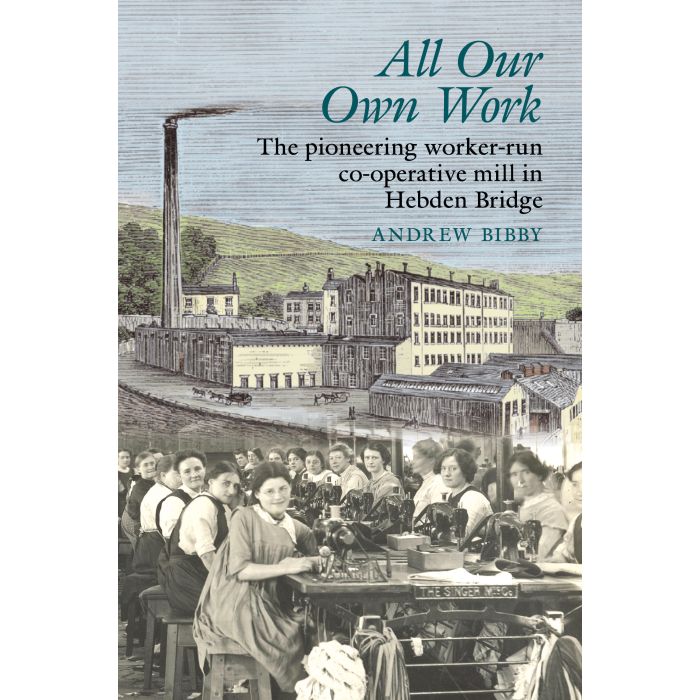
All Our Own Work
The pioneering worker-run co-operative mill in Hebden Bridge
£18.00
Not Yet Published
This title has not yet been released. You may pre-order now and we will deliver it to you when it arrives.
Contact [email protected]
Contact [email protected]
Expected: 2nd November 2026
An engrossing account of a pioneering and highly successful co-operative textile mill run by its workers from 1870 for almost fifty years, in the Yorkshire town of Hebden Bridge.
The mill became nationally, and indeed internationally, celebrated as an early example of a worker co-op. This study is now revised for its second edition.
The mill became nationally, and indeed internationally, celebrated as an early example of a worker co-op. This study is now revised for its second edition.
| Cordee Code: | CTO627 |
|---|---|
| Page Size: | 158 x 235 mm |
| No of Pages: | 246 |
| Publisher: | Gritstone Publishing Co-operative |
| ISBN13: | 9781913625252 |
| Author: | Andrew Bibby |
| Published Date: | November 2026 |
| Edition: | 1st 2026 |
| Binding: | Paperback |
| Illustrations: | 23 b/w illustrations |
| Weight: | 420g |
| Product Type: | Book |
Wanting to create employment under their own control, textile workers in the small Pennine town of Hebden Bridge developed in the years from 1870 a successful co-operative business which at its peak employed over 300 women and men - and which made a profit every single year.
The 'Nutclough Mill' became nationally, and indeed internationally, renowned. Its central figure Joseph Greenwood was involved in the creation of the International Co-operative Alliance. Women associated with the co-operative set up the country's first branch of the Women's Co-operative Guild.
Creating, almost for the first time, a new way of working wasn't always easy. There were debates on how to share the rewards of the business, and on how much power those who provided the capital should be given. There were dilemmas to face: should the mill produce quality products or poorer goods that sold better?
This engrossing account of a worker-run business is the first significant study of early producer co-operatives in Britain for over a century. The lessons learned in Hebden Bridge are still relevant today for all who seek to find new ways of working.
The 'Nutclough Mill' became nationally, and indeed internationally, renowned. Its central figure Joseph Greenwood was involved in the creation of the International Co-operative Alliance. Women associated with the co-operative set up the country's first branch of the Women's Co-operative Guild.
Creating, almost for the first time, a new way of working wasn't always easy. There were debates on how to share the rewards of the business, and on how much power those who provided the capital should be given. There were dilemmas to face: should the mill produce quality products or poorer goods that sold better?
This engrossing account of a worker-run business is the first significant study of early producer co-operatives in Britain for over a century. The lessons learned in Hebden Bridge are still relevant today for all who seek to find new ways of working.